Hello Friends,
My new recording Fortune Telling (Adivinhação) is finally here. Read on for installment two of the long version in installments (the short version is in the liner notes below).
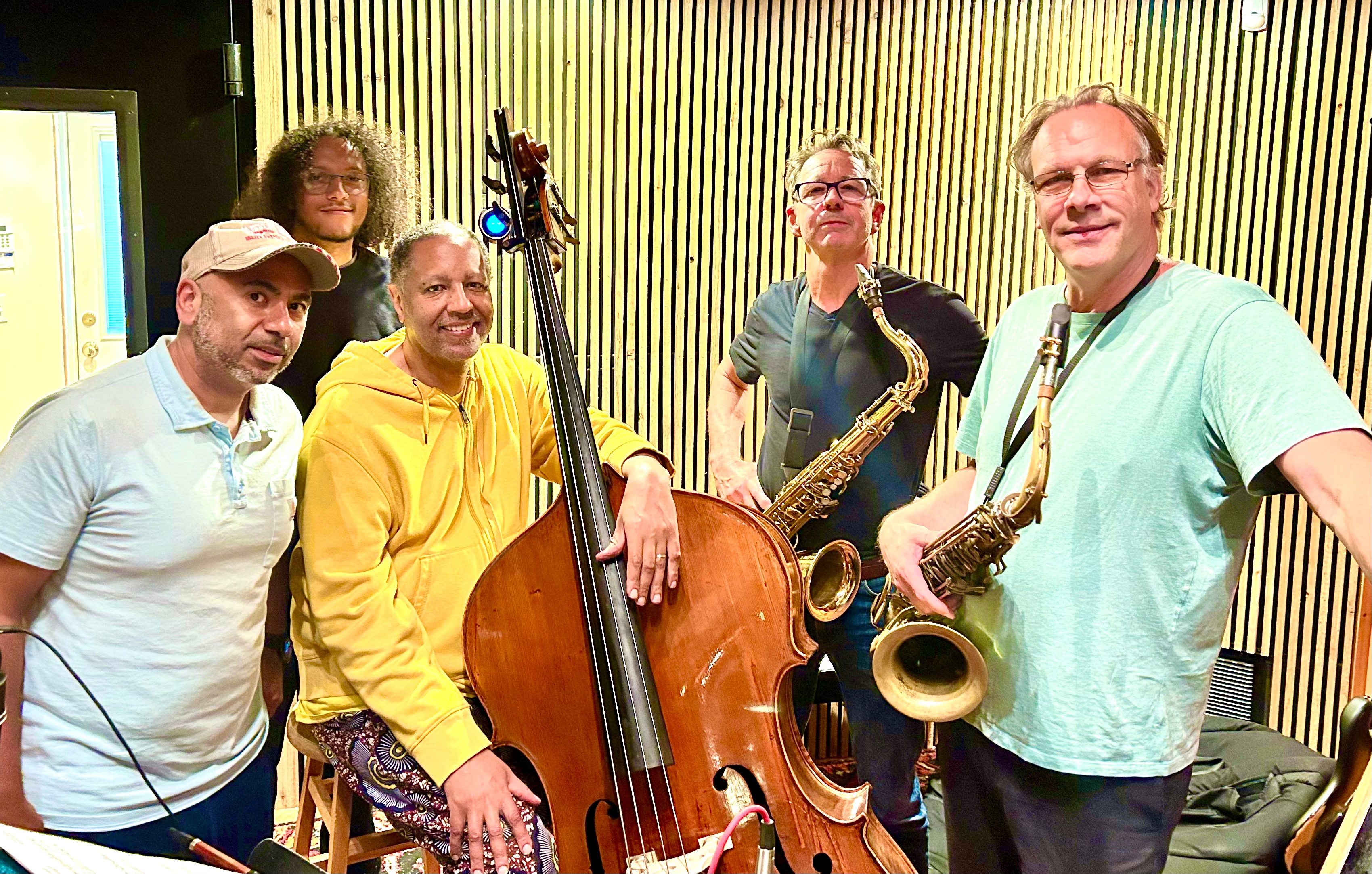
Tim Armacost and I cooked up the idea of recording the tunes from our Seattle gigs in New York but after sleeping on the idea for a few cycles I realized the drummer I really dreamed of for the project was Ali Jackson, so plans evolved to a session in Detroit where Ali is currently based with him, Robert Hurst, and a fantastic local pianist there named Ian Finkelstein. The second reed part was originally intended for bass clarinet so Tim amped up the shedding on his BC.
The informed reader will note that Ali and Robert are players of much renown, having played with the Lincoln Center Orchestra, the Tonight Show Band, and other high-profile endeavors too numerous to mention here. One may fairly ask what was going through the author’s mind as he prepared. The last time I played with these sorts of cats was a lifetime ago when Reggie Workman, Andrew Cyrille, and Bobby Bradford joined me on my first recording, Lost Bohemia. I think because of the tradition among jazz greats of helping to move young players forward, those beautiful folks were positive and completely dedicated to making the session a success. And although I expected the current cast to be of the same mind, I channeled any nerves I had into preparation.
The first meeting in June of 2025 was in Robert’s kitchen for a friendly bite of mediterranean cuisine followed by a rehearsal downstairs. For me, the rehearsal did not go well…. (to be continued)
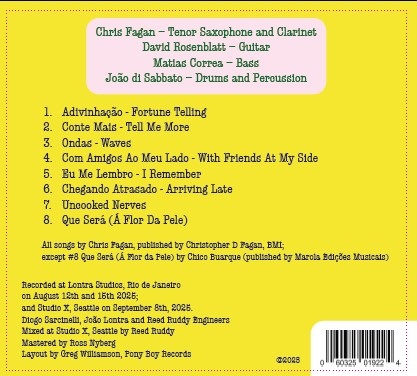
CD Liner Notes:
May I tell you a little about how this project came about? I began writing these tunes a couple of years ago when I fell in with a supportive collective of musicians that composed and played each other’s music in regular sessions here in the US. I also made some trips down to Brazil in this period, and became impressed with how central music is to daily life in Brazil, and how the joyful energy and openness of Brazilians is reflected in the various rhythms and harmonies of their music. It’s as if everyone in Brazilian society PARTICIPATES in the music; by playing it, by singing it, by dancing to it, on the beach, on the streets, in nightclubs, everywhere. The careful listener will also note that while there is a tremendous amount of sameness in the harmonic vocabulary of the American jazz repertoire, Brazilian composers have shown an admirable disregard for these conventions. The bridge to perhaps the most recognized tune on earth, Garota de Ipanema (Girl from Ipanema), uses traditional jazz harmonic building blocks to take the listener on a journey of radical unexpectedness after an admittedly uneventful opening 16 bars. I also tried to break free of this post-bop predictability and let my inner ear and the aspirations of the melody tell me where the harmony should land.
Thus inspired, I eventually had seven original tunes that straddled the jazz and Brazilian Popular Music genres and then wondered how, where, and when I would record them. Would they sound too generically Bossa Nova as so many Americanized versions of Brazilian music tended to be? Would some of the jazzier tunes such as Chegando Atrasado with its busy Coltrane-like harmonies fit in a Brazilian style? Experience, or rather experimentation, made the decision for me. I performed and ultimately recorded the tunes in the US with fantastic jazz musicians and found that the essential Brazilian-ness of the tunes was lost. I didn’t feel tropical warmth. I didn’t feel the Amazon, the jungle, the creatures, the families of rhythms that survived the great crossing and lived on in the new world. I didn’t hear strangers laughing and talking like family in the streets and in cafes and on the beach. Brazil had vanished.
So on a trip to Brazil, I recruited my long-time friend and collaborator, David Rosenblatt to help me find the right Brazilian grooves and together we made the recording in Rio de Janeiro, him on guitar, me on woodwinds, and the very talented Brazilians Matias Correa on bass and João di Sabbato on drums and percussion. And here we are. I was satisfied that the timbre of the tenor and clarinet–new instruments to me–projected the emotions that call to me in my continual awakening in this mysterious universe, emotions that I could never communicate with my speaking voice, and enough novelty to claim a place in the massive lava flow of creative material that is our commercial music ecosystem and share what I have with you. I hope you enjoy.
 Chris Fagan Jazz
Quite a tale, Fago!
You are ready to meet my writing coach and start your memoir!! ________________________________